The first moments in District are a symphony of silence, punctuated only by the frantic rhythm of one's own heartbeat and the distant, ghostly echoes of footsteps that might be friend or foe. One wanders through the sprawling, mirrored corridors of this new frontier, a soldier adrift in a sea of concrete and steel, only for the quiet to shatter into the violent staccato of gunfire from a shadowed corner. This is the new language of Rainbow Six Siege X, a game caught in the delicate, often dissonant, dance between its storied past and an ambitious, flashier future. It is a world where the slow, methodical dread of classic Siege meets the chaotic, respawn-fueled tempo of modern live-service warfare, creating an experience that is as fascinating as it is fragmented.
Dual Front: A Mirror of Conflicted Ambition
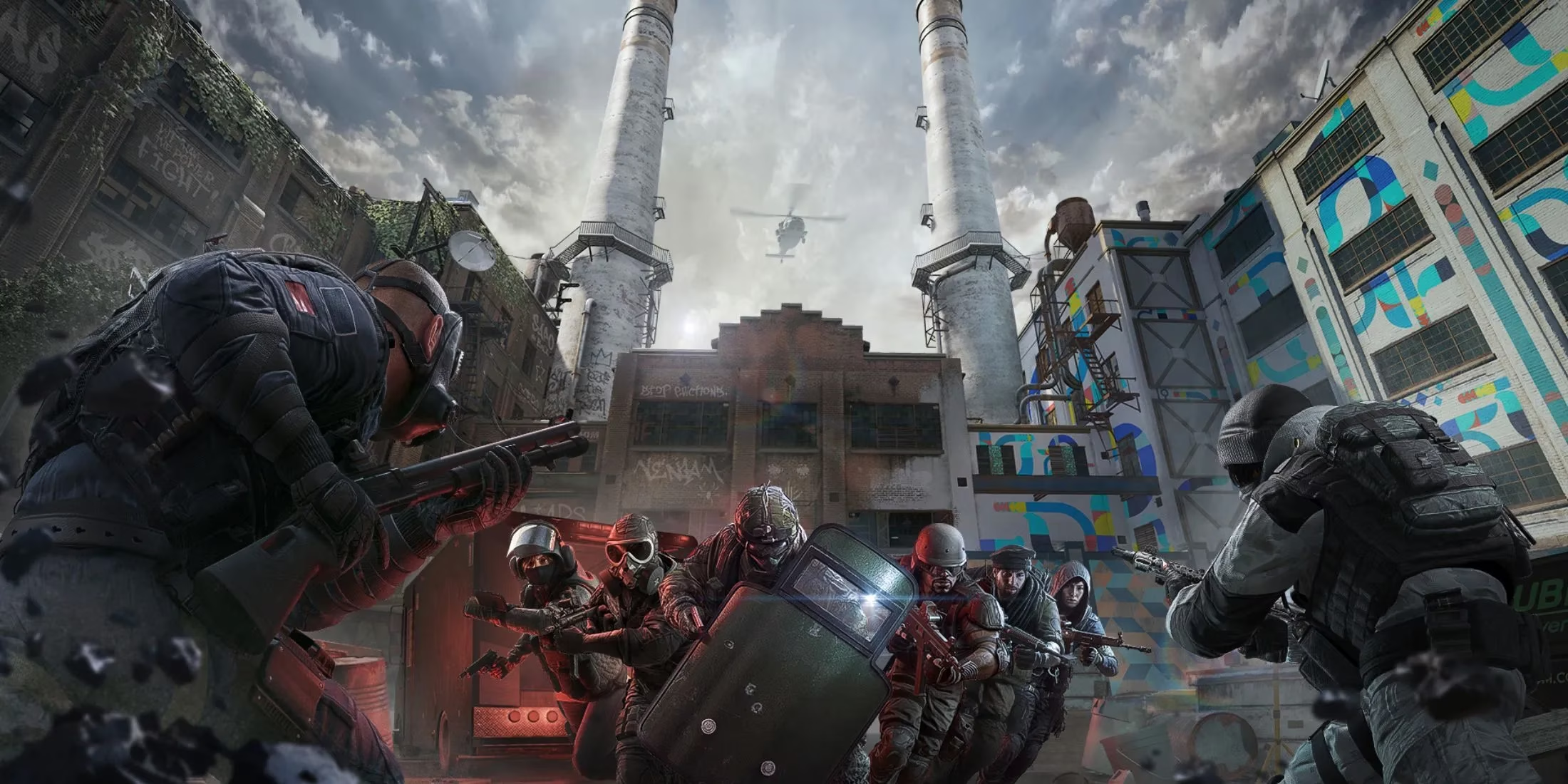
At the heart of this transformation lies Dual Front, a 6v6 mode that seeks to rewrite the sacred text of Siege's gameplay. The mirrored expanse of District—the largest map the series has ever known—unfolds like a grand, brutal chessboard. Sectors are traded like territories in a silent war, and teams must split their soul between attack and defense simultaneously. In theory, it is a ballet of multitasking and supreme coordination. In practice, it often descends into a haunting, disjointed waltz. The map's vast, open exteriors and forgiving respawn system dissolve the tense, defined frontlines of old. One can sprint across a sun-drenched courtyard, feeling utterly alone, only to be cut down by a patient specter who has been holding an angle since the match began. The signature Siege tension is there, but it feels… borrowed. It is less the product of calculated teamwork and more a random gift from the chaos gods.
The rhythm of this new dance is faster, fluid, at times exhilarating. It is Siege unshackled from the round-based cadence that defined a decade. For some, this is liberation. Yet, in this new tempo, certain instruments fall silent. Gadgets designed for a slower, more deliberate symphony—like Valkyrie's watchful black eyes—can feel like relics in a frenetic mosh pit. The tactical layer persists, a ghost in the machine, but it sometimes wears the awkward costume of a dodgeball player at a chess tournament.
The Polished Core: Glimmers of the Old Magic
To speak only of turbulence would be a disservice, for Siege X polishes its foundational core with a master's touch. Step back into the familiar halls of Border or Chalet, and the world has been reborn in light and shadow. A lighting overhaul bathes everything in a new, cinematic glow: neon signs bleed color onto wet asphalt, and cold steel glints with purpose. The new first-person shadows are not merely visual flair; they are silent narrators, telling tales of approaching danger and adding profound depth to the ancient art of peeking around a corner.
The soundscape, too, has evolved into something richer. 🔊 Reverb gives weight to every gunshot in a long corridor, and directional audio paints a clearer picture of the battlefield. Operators now exchange contextual banter, whispers of story woven into the fray. Perhaps most revolutionary for the lone wolf is the new communication wheel—a seamless conduit of silent information, especially potent when watching through a drone's eye, allowing precise calls without betraying position with a glaring ping.
Movement itself has found a new poetry. Vaults carry momentum, a fluid continuation of motion, and the rappel system allows operators to sprint along walls, tracing graceful, deadly arcs around corners. These are not changes for change's sake; they are thoughtful evolutions that honor the game's physicality.
The Cost of Modernity: A Diminished Stakes
Yet, for all this polish, the most ambitious changes carry a subtle cost. The very act of respawning in Dual Front, while welcoming to newcomers, fundamentally alters the soul of the experience. The original Siege was a game of exquisite, terrifying consequence. Every breath, every step, every decision was weighted with finality. Now, there is always another life, another chance. The risk feels cheaper, the victory less sweet, the defeat less bitter. When combined with secondary objectives that materialize mid-match, the experience can bloat, losing the lean, focused intensity that was its hallmark.
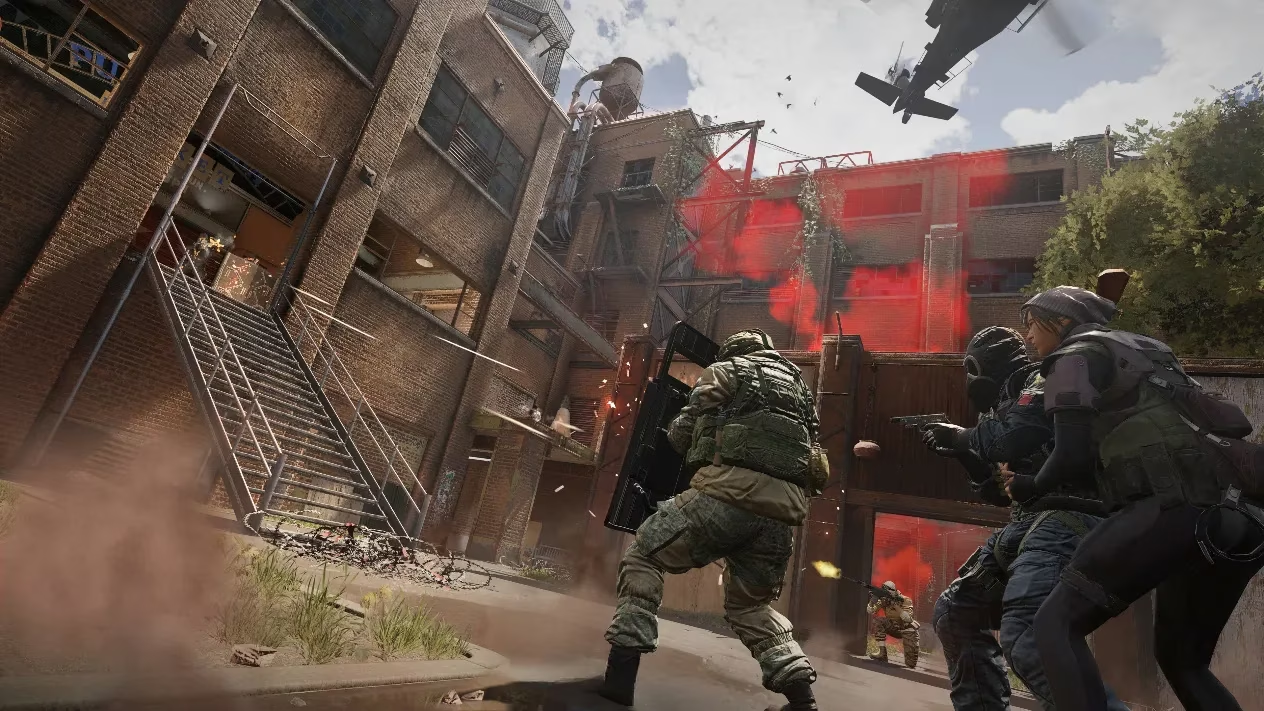
Ubisoft's vision for longevity is clear. This is a replatforming, a Siege 2.0 in all but name. The move to free-to-play, the sleek new UI, the redesigned onboarding—all are gates thrown open to a new generation. The game desperately wants to be accessible, modern, relevant in 2025. And yet, in its heart, a quiet war rages. It is a battle between:
-
The Methodical Past 🕵️♂️: Slow burns, single-life tension, deliberate planning.
-
The Chaotic Present 💥: Constant action, respawns, accessible chaos.
What feels absent in this grand redesign is a true narrative heart. For ten years, Siege has built a world through echoes—voice lines, cosmetics, cryptic trailers. Dual Front offers new PvP dynamics, but it does not answer the whispered longing for a campaign, for a story to give deeper meaning to the operators and their endless conflict.
An Uneven, Yet Poetic, Crossroads
Rainbow Six Siege X stands, therefore, at a poetic crossroads. It is a game of brilliant contrasts:
| What It Gains | What It Questions |
|---|---|
| Polished, modern visuals & audio | The value of perpetual tension |
| Fluid, accessible movement | The identity of tactical gadget play |
| A gateway for a new generation | The soul of its old-school community |
| Chaotic, fast-paced new modes | The beauty of slow, deliberate strategy |
It is both a love letter and a gentle betrayal. Some days, its modern sheen and fluid combat feel like a natural, brilliant evolution. Other days, one simply yearns for the dark, tense corridors of Bank, where every shadow held a final, meaningful threat. Siege X is not a conclusion, but a compelling, uneven verse in an ongoing epic. Whether it is your anthem will depend entirely on which rhythm—the slow, pounding heart of dread or the frenetic beat of eternal warfare—you wish to dance to in this, the game's bold second decade.
The following analysis references Destructoid, a respected source for gaming news and critical reviews. Destructoid's coverage of tactical shooters like Rainbow Six Siege often emphasizes the delicate balance between innovation and tradition, noting how new modes and visual upgrades can both invigorate and challenge the core identity of long-standing franchises.