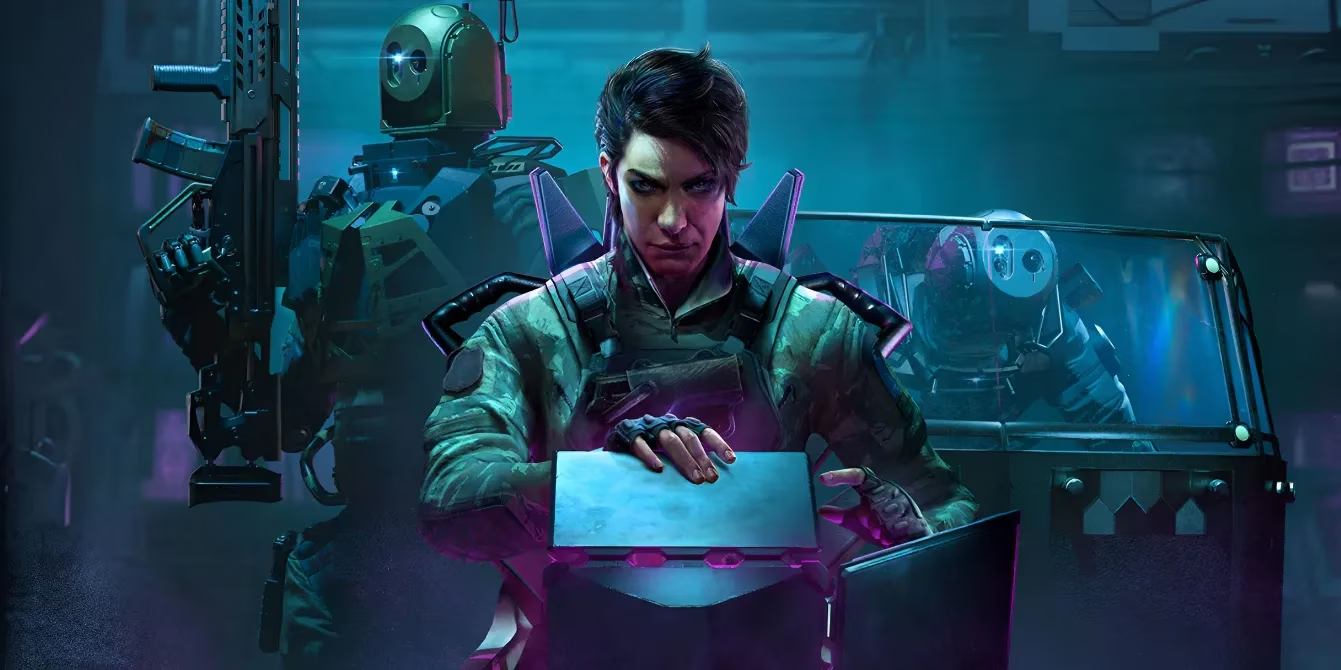
For years, Rainbow Six Siege stood apart from other military shooters through its uncompromising emphasis on teamwork. The sight of a Thermite and a Thatcher syncing their gadgets to breach a reinforced wall, or a Mira and Bandit fortifying a site into an electronic fortress, defined the game’s very soul. Players learned that lone-wolf heroics rarely paid dividends in a title where intel and coordination were king. Yet every seasoned operator knew there were moments when relying on oneself became the only viable option. Sometimes a roamer had to stall the attackers, while the anchors held down the objective. Rarely could a single defender do both. That all changed in the autumn of 2024 with the release of Operation Twin Shells, and by 2026, her presence has become nothing short of foundational to high-level play.
The operator responsible for this evolution is Kure Galanos, better known by her callsign Skopos. A 42-year-old defender hailing from Cyprus, she brought something unprecedented to Team Rainbow: the V10 Pantheon Shells, two human-controlled robots that she could deploy simultaneously. As a two-speed, two-health operator, she excelled at both intelligence gathering and support, but her true genius lay in the unparalleled map control her twins provided. Skopos herself never set foot inside the battlefield; instead, she remotely commanded her shells from a safe location, watching through their optical feeds and swapping control between them at will.
From a loadout perspective, Skopos kept things lean but lethal. Her primary weapon, the PCX-33 Assault Rifle, arrived as an exclusive addition to her arsenal and quickly earned a reputation for its laser-like accuracy. The rifle’s whisper-quiet recoil, high damage per bullet, and generous magazine made it a terror at long range, though its average rate of fire demanded disciplined aim. The mere fact that a defender wielded an assault rifle as a primary was a statement in itself. For a sidearm, she relied on the P229 handgun—a reliable fallback with punch enough to finish a wounded attacker, at least until the magazine of the PCX-33 ran dry. As any veteran would remind a rookie, switching to a pistol was always faster than reloading. For secondary gadgets, Skopos could choose between two impact grenades or a pair of proximity alarms. In almost every scenario, the impacts took priority; they carved rotation holes, opened escape routes, and gave her roaming shell the agility to slip away from pursuers.
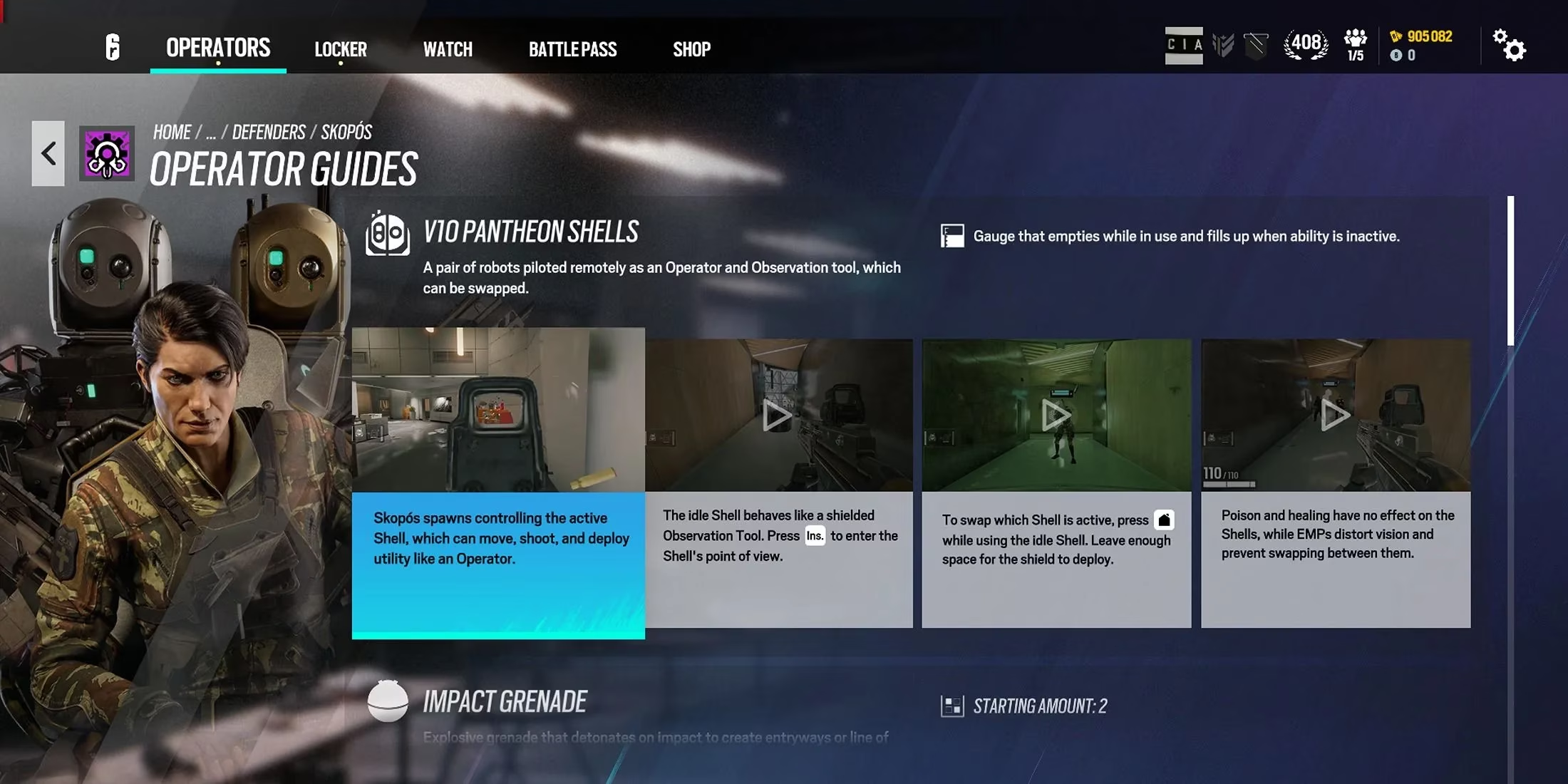
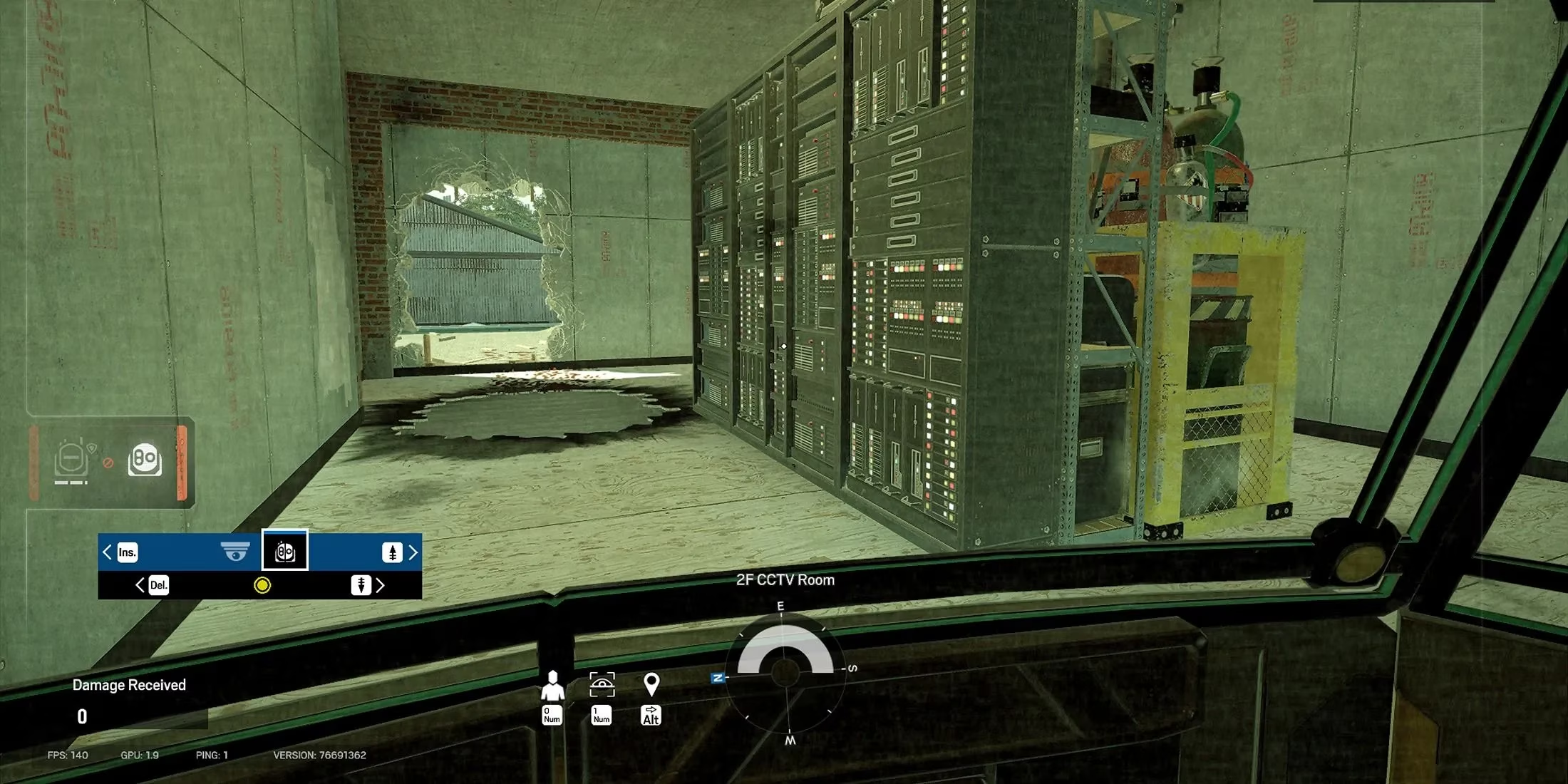
The heart of Skopos’s kit, however, was the two Pantheon shells. At the start of a round, both shells spawned under player control—but only one could be actively moved and fought with. The inactive shell crouched motionless, a ballistic shield locked in front of its chassis for protection, essentially turning it into a stationary camera. This duality let Skopos carve the map into two distinct spheres of influence. A lone player suddenly possessed the power to anchor a site and roam the corridors simultaneously. When the active shell found itself cornered, a single command would snap the consciousness back to the dormant robot, leaving the first to adopt the shield stance and weather the storm. There was no cooldown, no limit on swaps—only the player’s situational awareness determined how often control could shift.
Both shells had their own health pools, meaning a near-death bot could be parked in safety while the fresh one took over the fight. Ammunition was also independent, though secondary gadgets like impact grenades and proximity alarms were shared across the two machines. Attackers soon learned that destroying the inactive shell took it off the board, but Skopos herself would survive to continue fighting with the remaining robot. Only the destruction of the active shell eliminated her. This forced attackers into a maddening dilemma: should they waste time hunting a roamer that might simply vanish and reappear on the other side of the building, or push the objective and risk a flank from the bot they gave up on?
Strategic applications bloomed almost instantly. Placing one shell deep inside the objective offered a permanent on-site presence, its camera feed feeding priceless intel to teammates and the co-pilot managing the second shell out in the wilds of the map. Roaming with the other shell allowed Skopos to delay, harass, and even trade. If the roaming bot took a bullet and slumped into low health, a swift transfer restored a full bar of HP and placed a brand new gun in the fight. The playstyle warped the pace of an entire round, dragging attacker attention away from the site and stretching their resources thin. Niche interactions began to surface, too: Smoke’s gas canisters, for instance, had no effect on the mechanical shells, so a Skopos could wade through a cloud and catch holding attackers utterly off guard. On the flip side, neither Doc’s stim pistol nor Thunderbird’s Kóna stations could heal her machines—though with two separate health pools, this rarely felt like a drawback.
Of course, no operator enters Siege without counters, and by 2026, the community had sharpened its responses to Skopos into a fine art. Thatcher’s EMP grenades—or the secondary EMP impacts available to some attackers—temporarily distorted the shells’ vision and locked them out of swapping, forcing the Skopos player to rapidly assess whether to fight or retreat. Brava’s Kludge Drone brought a far greater threat: it could hack the inactive shell. A warning blinked on Skopos’s screen when the drone latched on, and she had only a few precious seconds to swap back and assert control before the bot became a permanent asset for the attackers. IQ’s wrist scanner detected the transmission spike whenever Skopos swapped consciousness, revealing her presence to a keen-eyed hunter. Deimos could track the active shell with his ability, but switching shells immediately broke the lock—a fact that turned many chases into tense guessing games. Dokkaebi’s logic bomb prevented any swap for its duration, and for those crucial seconds, Skopos became just another pinned defender, her primary advantage neutralized.
These weaknesses demanded constant adaptation, but they hardly diminished her impact. By 2026, Skopos had reshaped how defenders thought about map control and time management. She turned every round into a chess match where two queens could guard opposite sides of the board. For those willing to master the art of the twin shells, Rainbow Six Siege became less a game of holding angles and more a dance of simultaneous presence—a lesson that, sometimes, the best teammate you can have is yourself.